
Istanbul Gelisim University (IGU) continues to organize events that bring its students together with different art disciplines and industry professionals. At the event held by the Visual Communication Design Department of the Faculty of Fine Arts, director Ahmet Bikiç's documentary "SALT (A Story of Homeland Defense: The Martyrs of Salt)" was screened for students. In the talk that followed, moderated by Faculty of Fine Arts Vice Dean Assoc. Prof. Murat Doğan, the discussion covered the documentary's contribution to historical and cultural memory, the power of cinema to build bonds between societies, and the production processes of documentary filmmaking.Produced in cooperation with the General Directorate of Copyright of the Ministry of Culture and Tourism of the Republic of Türkiye, the Yunus Emre Institute, and the Turkish Cooperation and Coordination Agency (TİKA), the documentary deals with shared history, cultural heritage, social memory, and the ties between different geographies.
A Historical Memory Reaching from Salt to the Present
The "SALT" documentary examines, in their historical context, the events experienced by the Ottoman State on the Canal-Sinai-Palestine Front during the First World War and the Battles of Salt fought in 1918. The struggle of the Ottoman units in the region and the developments on the Palestine Front were conveyed not only through military history but through the shared historical memory of Türkiye and Jordan.The Salt Turkish Martyrs' Cemetery, one of the important symbols of that shared memory, also features in the documentary's narrative. Through the historical and cultural meaning the cemetery has carried from the past to the present, attention was drawn to the importance of preserving the shared heritage and passing it on to future generations.
The Unifying Power of Cinema Discussed
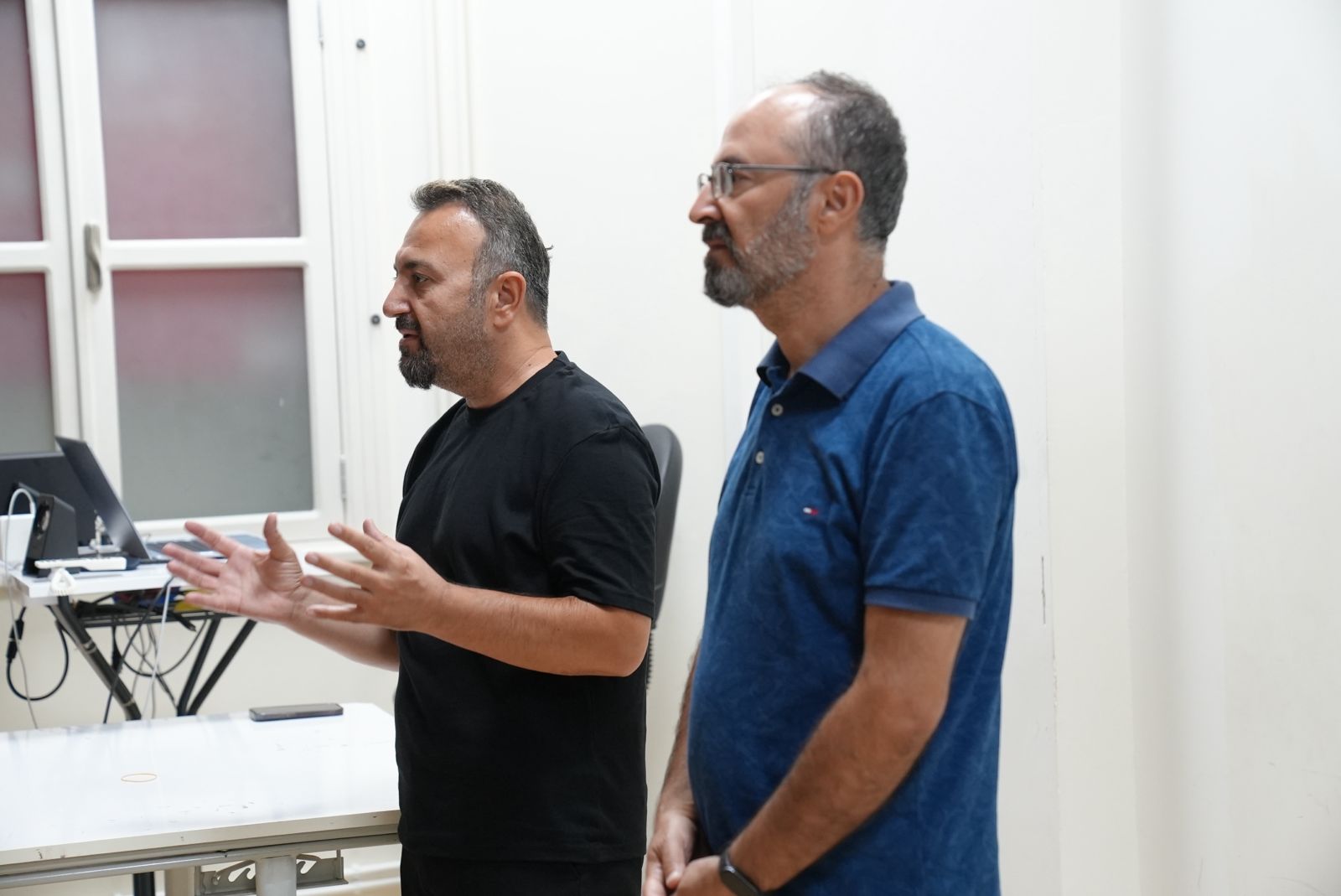
In the talk held after the screening, director Ahmet Bikiç shared the story of how the documentary came about and his approach to cinema. The discussion stressed that documentary cinema is not merely a tool for recording the past; by building connections between people, place, and memory, it makes it possible to convey historical events in their different dimensions.The talk also considered the importance of approaching historical events not only through conflicts and political developments, but through what people lived, the traces they left, and the shared memory of societies. The aspects of "SALT" that pass historical heritage on to younger generations and help make the ties between different cultures visible were discussed.
An Important Experience for Visual Communication Students
The talk, moderated by Assoc. Prof. Murat Doğan, also covered the different stages of documentary production, including research, fieldwork, cinematography, editing, voice-over, and building the narrative. The event gave Visual Communication Design students the chance to hear directly from the director about the production process of a professional documentary, from the idea stage to its meeting with the audience.The social responsibility dimension of documentary cinema also came up at the event, with discussion of the role visual communication designers and filmmakers can play in preserving cultural heritage, developing historical awareness, and strengthening mutual understanding between different societies.
The screening and talk held at the Istanbul Gelisim University Faculty of Fine Arts allowed students to get to know documentary production processes up close and to consider historical and cultural heritage from a visual communication perspective. The event also allowed the role documentary cinema plays in passing on social memory and building bonds between different cultures to be examined in its different aspects.
"The Memory of a Nation, the Gratitude of a Land"
Shaped by the approach of "The Memory of a Nation, the Gratitude of a Land, the Voice of Unforgettable Martyrs," the documentary carries what was lived in the past into the present not only through historical facts, but through place, people, memory, and cultural ties.The screening and talk at the Istanbul Gelisim University Faculty of Fine Arts helped students consider historical and cultural heritage from a visual communication perspective, and once again showed the power of documentary cinema to keep social memory alive, build bridges between cultures, and bring people together around shared values.
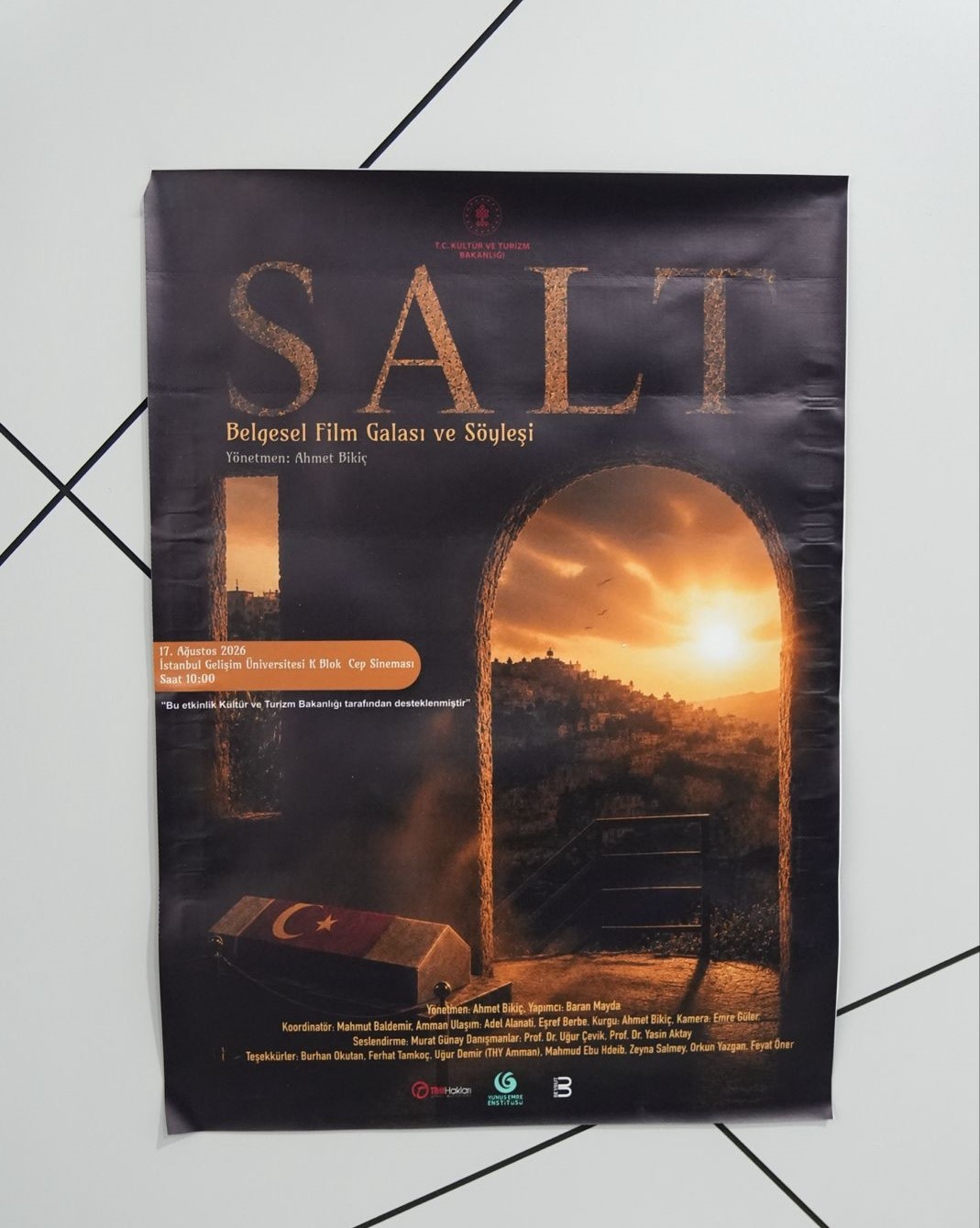
SALT Documentary Film Crew
Director: Ahmet BikiçProducer: Baran Mayda
Coordinator: Mahmut Baldemir
Advisors: Prof. Uğur Çevik, Prof. Yasin Aktay
Editing: Ahmet Bikiç
Camera: Emre Güler
Voice-Over: Murat Günay
Amman Transportation: Adel Alanati, Eşref Berbe
Acknowledgments: Prof. Mustafa Öztürk, Ensar Fırat, Cavit Köseoğlu, Veysi Kaya, Burhan Okutan, Ferhat Tamkoç, Uğur Demir (THY Amman), Mahmud Ebu Hdeib, Zeyna Salmey, Orkun Yazgan, and Feyat Öner.