
İstanbul Gelişim University continues its work in health technologies and scientific research with projects contributing to the international literature. A study conducted by Res. Asst. Görkem Açar from the Sports Management Department of İstanbul Gelişim University's Faculty of Sport Sciences (FSS) and the research team yielded important results that will pioneer the global literature on the rehabilitation of Multiple Sclerosis (MS) patients. The study, carried out using the Cyberdyne HAL robotic rehabilitation system, was published in the journal Multiple Sclerosis and Related Disorders as the world's first study examining the effects of HAL technology on MS patients.
Effects of HAL-Assisted Robotic Rehabilitation on MS Patients Examined
The study, titled "Effects of Hybrid Assistive Limb (HAL) Application on Locomotor Function and Balance Parameters in Individuals with Multiple Sclerosis," scientifically established the effects of HAL-assisted robotic rehabilitation on the gait disorders, balance loss, and functional performance problems seen in MS patients. Within the scope of the study, individuals diagnosed with MS were enrolled in a HAL-assisted robotic gait rehabilitation program for 8 weeks, five days per week. The results showed significant improvements in gait speed, balance performance, functional mobility, and gait endurance.AI-Based Wearable Robotic System Draws Attention
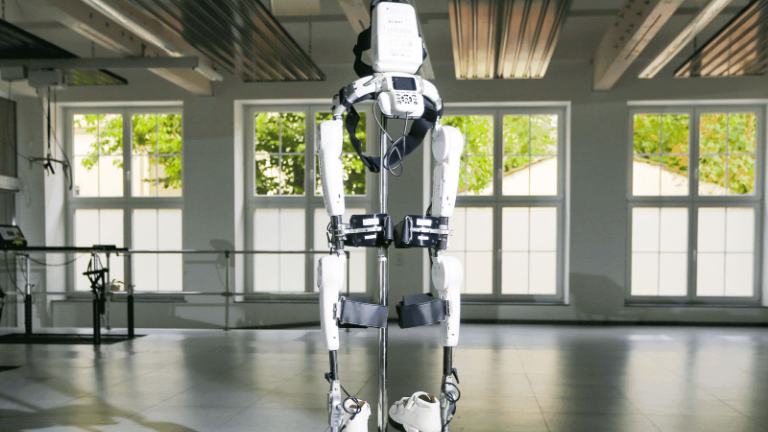
The Cyberdyne HAL system used in the research draws attention as an AI-based wearable robotic exoskeleton technology that detects biological signals from the patient's muscles and supports movement. The system activates neuromuscular relearning processes by supporting the user's voluntary movements.The Cyberdyne HAL device currently holds FDA approval for rehabilitation applications in traumatic brain injury, stroke, and spinal cord injuries. The US Food and Drug Administration (FDA) classified the HAL for Medical Use (Lower Limb Type) device under the "Powered Lower Extremity Exoskeleton" category and approved its use for individuals with spinal cord injuries.
FDA documents note that the HAL system is a robotic rehabilitation device aimed at improving walking functions, and that it produces clinically meaningful improvements particularly in individuals with spinal cord injuries.
"We Believe It Will Open the Door to New Clinical Studies"
This study carried out by Res. Asst. Görkem Açar and the team on MS patients is regarded as one of the first pioneering publications in the field, and in the world, to show that the HAL system can be effective in Multiple Sclerosis rehabilitation. The research is said to provide important clinical evidence that could scientifically contribute to FDA treatment approval processes for the use of HAL technology in MS patients going forward.Res. Asst. Görkem Açar offered the following assessment of the study:
“Gait disorder and balance loss in MS patients are among the most important problems that seriously affect quality of life. Seeing that HAL-assisted rehabilitation produces meaningful improvements in these areas is very significant. We believe that our study will open the door to new clinical studies on the use of robotic rehabilitation technologies in the treatment of MS.”
This study conducted by an İstanbul Gelişim University academic is regarded as an important example of the academic output the university produces at the international level in health technologies and scientific research.